This fall, the Queer May Association conducted a study on the level of sex education in Poland. Its results clearly show that sex education classes have little to do with it. However, students, teachers, and parents are united: sex education is necessary. Just before the post-election change of school superintendents, Queer May draws attention to the importance of the topic and launches a new social campaign, “100 words we want to hear in school.”
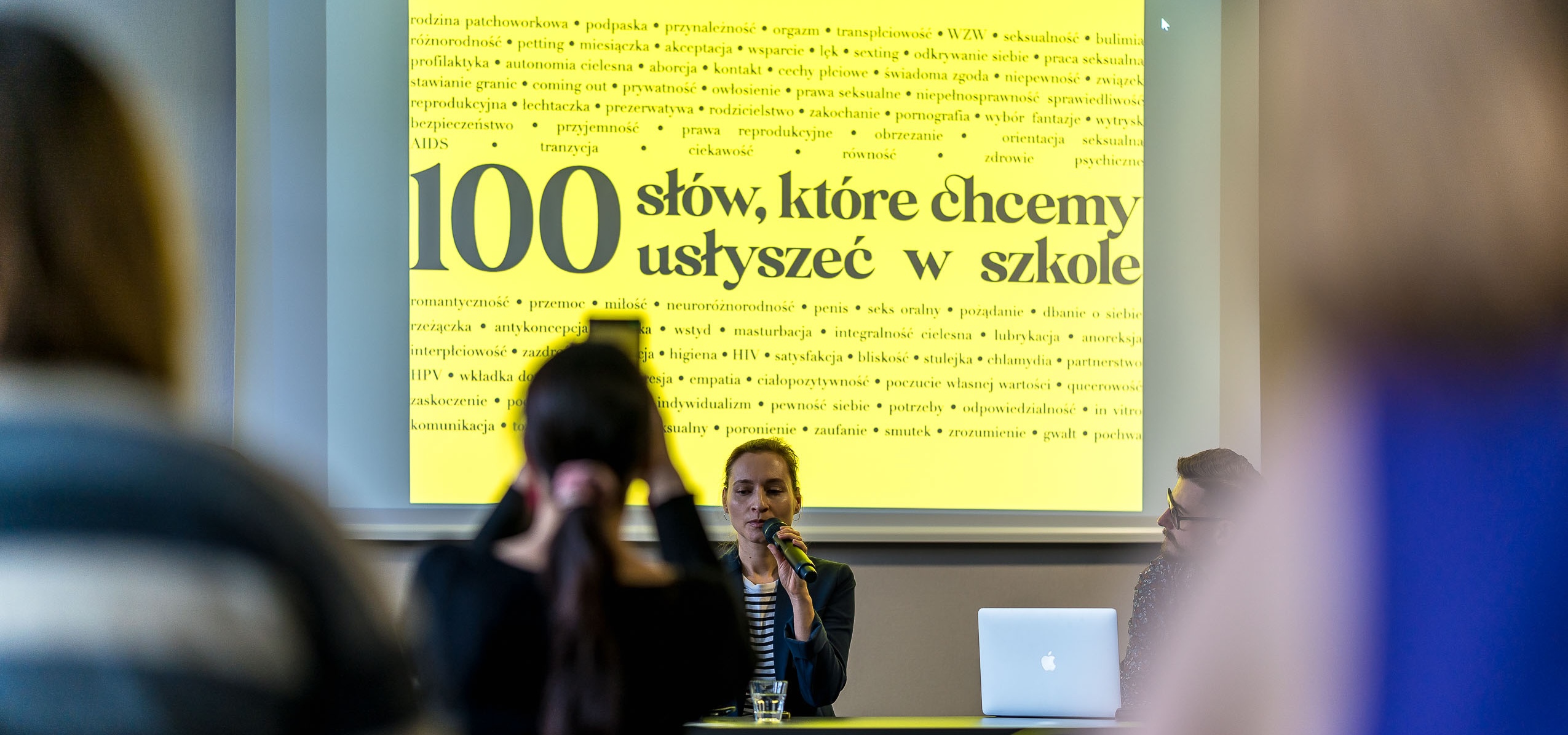
In recent days, billboards and posters with words such as contraception, masturbation, abortion, diversity, and orientation have appeared in selected Polish cities and online. Research, discussions, and workshops with young people conducted by Queer May show that these are some of the words we will not hear in Family Life Education classes.
“Our campaign is based on a list of 100 words that are missing from sexuality education” – says Magda Dropek, president of the Queer May Association. “We co-created it with experts and young people for whom the experience of poor-quality sex education is very recent. We also know from students that topics that are not discussed become embarrassing. That is why it is all the more important that the words that are missing from sex education classes are included in the public space, including on our billboards” – she adds.
Among the hundred words selected in the campaign “100 words we want to hear at school”, we find references to sexuality and physicality, but also to health, safety, emotions, and values. These are topics that learners should be able to discuss freely in sex education classes with appropriately qualified staff.
We had a frank and inclusive discussion about solutions for sex education on November 25 in Krakow during the event “Sex Education. Passing Grade?” At the invitation of the Association, the event was attended by people who educate about sexuality on a daily basis, representatives of non-governmental organizations, and activists.
“It is impossible to make responsible decisions about one’s health when sexuality is only discussed in a derogatory manner or not discussed at all. Our goal is to eliminate taboos and create a safe space for education and conversation. That is why we asked, among others, psychologist and educator Barbara Baran and a representative of a partner organization from Iceland, who spoke about inclusive queer education, to join the event” – emphasizes Anna Tereszko.
Based on a survey conducted in the fall on the level of sex education in Polish schools, Queer May also prepared a set of recommendations for the Ministry of Education, school superintendents, local authorities, and educators. “We demand reliable, inclusive, and accessible sex education in Polish schools” – comments Artur Maciejewski from the Association. “Our main recommendations are to replace family life education classes with actual sex education in line with WHO standards. Ideologically biased textbooks must be removed from the list of approved textbooks once and for all, and educators should be able to take advantage of continuing education courses” – he concludes.
For more information on what sex education in Poland should look like, visit: https://www.queerowymaj.org/sex-ed/.
The study is part of a project funded by Iceland, Liechtenstein, and Norway from the EEA Funds under the Active Citizens – Regional Fund program.